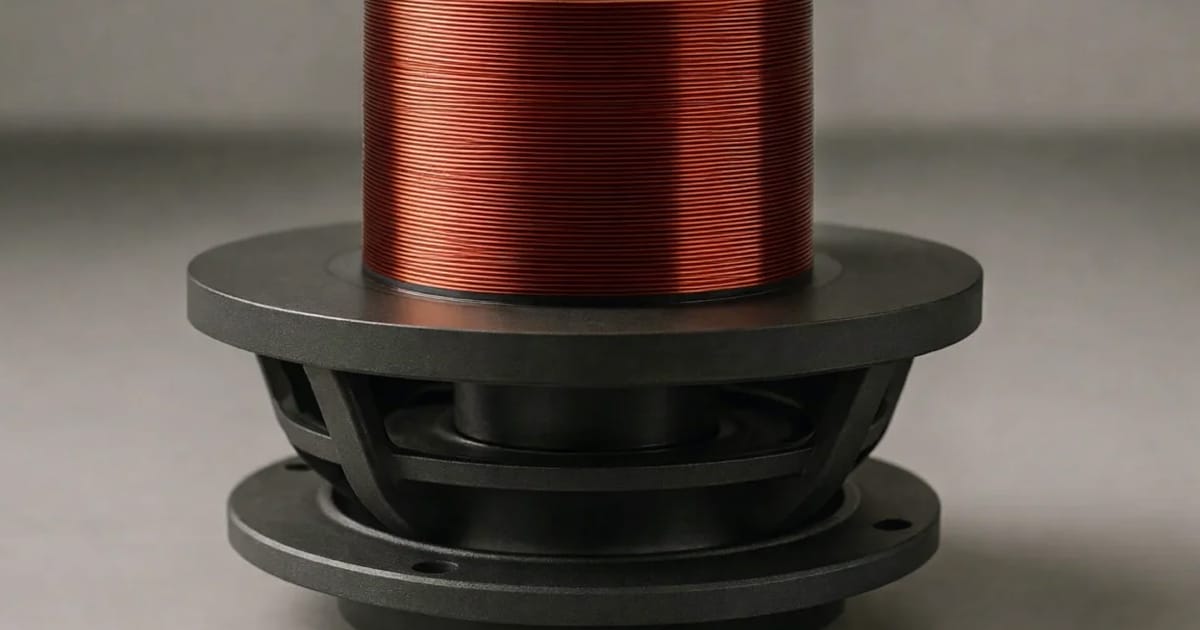
The voice coil sits at the heart of every subwoofer, yet most car audio enthusiasts know surprisingly little about this critical component. This tightly wound coil of wire converts electrical signals into the physical movement that creates bass. Understanding how it works can mean the difference between a system that performs flawlessly for years and one that leaves you stranded with blown equipment.
What Is a Voice Coil in a Subwoofer?
A voice coil is the electromagnetic component that converts electrical signals from your amplifier into the mechanical motion that produces sound waves. Think of it as the engine that drives your subwoofer’s cone. This tightly wound coil of wire sits inside the subwoofer’s magnetic gap, attached to the cone assembly. When your amplifier sends electrical current through the voice coil, it becomes an electromagnet that interacts with the subwoofer’s permanent magnet structure, creating the push-pull motion that moves air and produces bass.
How Voice Coils Work in Subwoofers

Voice coils create sound by using electromagnetic fields to move the subwoofer’s cone back and forth in response to audio signals from your amplifier. Your amplifier sends alternating current through the voice coil wire, creating a changing magnetic field. This field interacts with the fixed magnetic field from the subwoofer’s magnet structure. When the current flows one direction, the voice coil pushes away from the magnet. When it reverses, the coil pulls toward the magnet. This rapid back-and-forth movement happens dozens to hundreds of times per second, matching the frequency of the bass notes in your music. The voice coil’s former, the cylinder it’s wound around, transfers this motion directly to the cone, which pushes and pulls air to create the sound waves you hear.
Single vs. Dual Voice Coil Subwoofers: Understanding the Difference
Single voice coil subs feature one wire coil with fixed impedance, while dual voice coil subs contain two separate coils that provide multiple wiring configurations and greater system flexibility. A single voice coil subwoofer has two terminals (positive and negative) and presents one impedance option.
Dual voice coil subwoofers feature two independent voice coils wound on the same former, each with its own positive and negative terminals. Each coil carries the same impedance rating, but wiring them together changes the subwoofer’s total impedance. A dual 4-ohm voice coil sub wired in parallel presents a 2-ohm load to your amplifier. Wire those same coils in series and you get 8 ohms. This mathematical relationship follows Ohm’s law: parallel wiring divides impedance by the number of coils, while series wiring adds them together.
Why Dual Voice Coil Subwoofers Exist
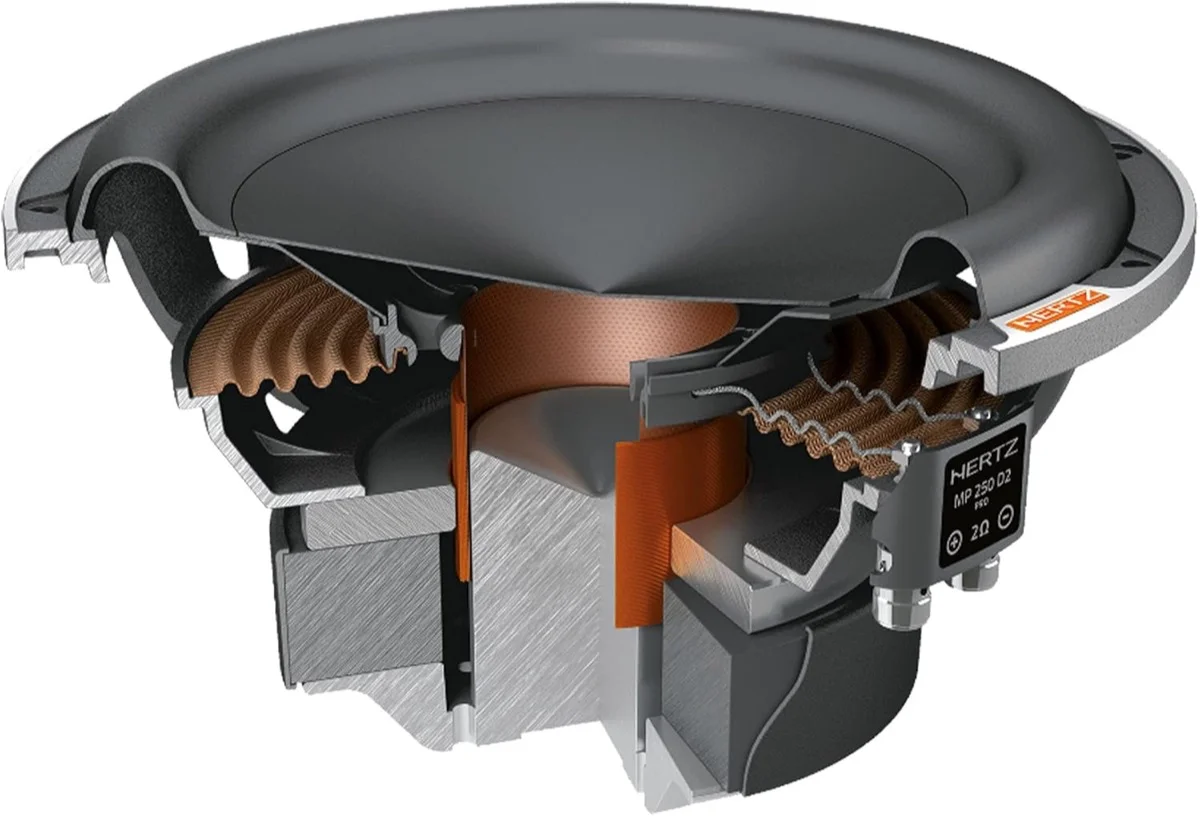
Dual voice coil technology was developed to solve impedance matching challenges and provide installers with more flexibility when designing complex car audio systems. Before dual voice coil subs became common, installers faced limited options when an amplifier’s optimal impedance didn’t match available subwoofers. The technology gained popularity in the 1990s as more powerful amplifiers emerged that could deliver maximum power at specific impedance loads. Today, dual voice coil designs dominate the market because they simplify inventory for manufacturers and retailers while giving consumers more configuration options.
Choosing Between Single and Dual Voice Coil for Your System
Your choice between single and dual voice coil depends on your amplifier’s impedance capabilities, the number of subwoofers in your system and your future upgrade plans. Single voice coil works great for basic systems with one sub and one amplifier channel. Choose dual voice coil when you need impedance flexibility, plan to add more subs later or want to wire multiple subs to achieve a specific impedance load your amplifier prefers.
Voice Coil Materials and Construction Quality
Voice coil materials directly affect power handling, heat dissipation and long-term reliability. Copper wire handles continuous power well because of its 401 W/m·K thermal conductivity, while aluminum’s 237 W/m·K rating trades some heat dissipation for a 70 percent weight reduction. High-temperature polyimide adhesives maintain bond strength up to 400°F, well above the 300°F threshold where standard adhesives fail. Edge-wound ribbon wire increases surface area by 30 percent compared to round wire, improving cooling. Vented pole pieces and voice coil gaps channel air directly across the windings. The Alpine Type-R series uses this design to achieve 40 percent better thermal management than sealed designs.
Common Voice Coil Problems and Warning Signs
Voice coil failure typically manifests as distorted sound, reduced output or complete silence, often caused by overheating from excessive power or poor ventilation. A rubbing or scraping sound indicates the voice coil has shifted in the gap, while a burnt smell suggests thermal damage. Mechanical damage from over-excursion can separate the coil from the former, creating intermittent operation or complete failure. Regular inspection and proper gain setting prevent most voice coil failures.
Ready to upgrade your bass or troubleshoot voice coil issues? Visit a specialty retailer who can demonstrate the impedance flexibility of dual voice coil designs and calculate the optimal configuration for your amplifier. Use the BestCarAudio.com Dealer Locator to find qualified professionals who understand voice coil technology and can maximize your system’s performance.

