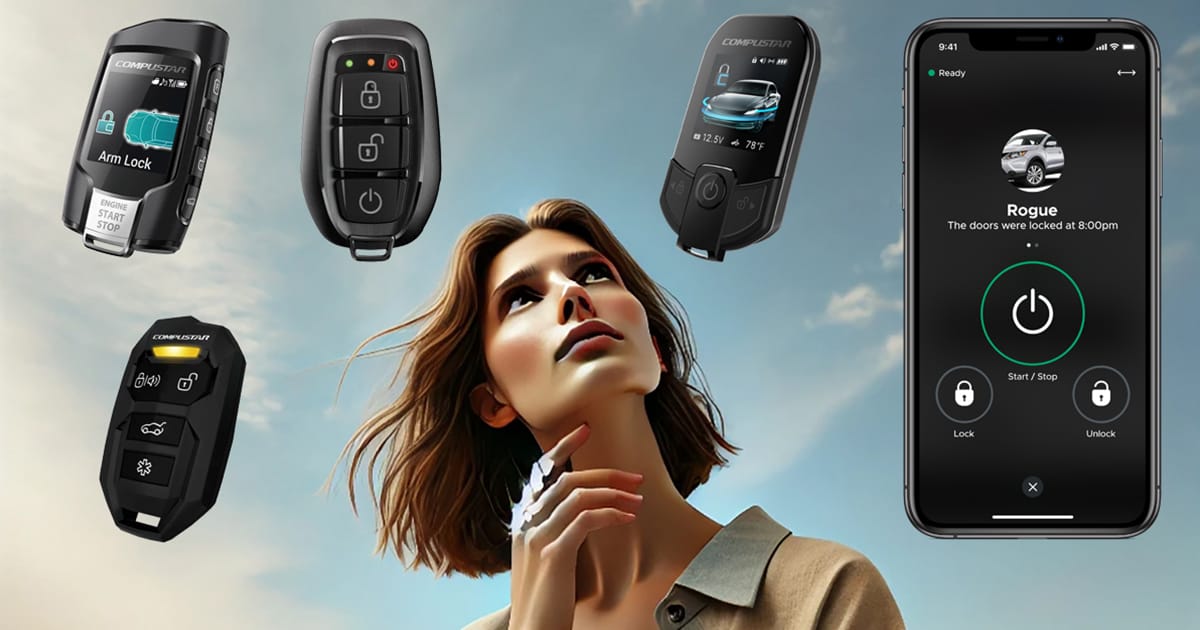
Under the hood, most remote car starters are very similar. Most brands offer two or three different controllers and allow the shop you work with to bundle those units with different remotes, providing varying levels of range and features. In this article, we partnered with the industry-leading remote starter manufacturer Compustar to explain the different options available to consumers. Here’s a simple guide to make choosing the best remote car starter easy.
Shopping for a Remote Car Starter
The shop you choose to install a remote starter is just as important as the hardware and remote you select. Working on modern cars and trucks isn’t as easy as it was decades ago. A modern starter needs to communicate with the engine management system, vehicle body control modules, and factory-installed security systems to function correctly. Making the proper connections and executing the correct programming are tasks best handled by an expert.
If you shop for the lowest-priced remote starter, the chances of issues down the road are exponentially higher than if you choose an expert shop that takes pride in professional installation.
Forego the urge to shop over the phone—visit retailers in your area instead. You’ll quickly get a sense of who is professional and who you should avoid.
1. Remote Start Range
The most significant difference between car starter key fobs is their range. Most modern factory-issued key fobs have a range of a few hundred feet. This means you can likely start your car from across a small parking lot, but you might not be able to start it from inside a store.
Aftermarket fobs range from 1,500 feet to three miles under ideal conditions. It’s better to think of these offerings as power levels. For example, the Compustar CS-925S starter system remote is rated to provide up to 1,500 feet of range. This remote provides two to three times as much power as a factory remote, often doubling or tripling the effective range.
At the opposite end of the spectrum, some remotes are rated for two to three miles. If you work in a large building, you’ll want the added power of these solutions.
2. Number of Buttons
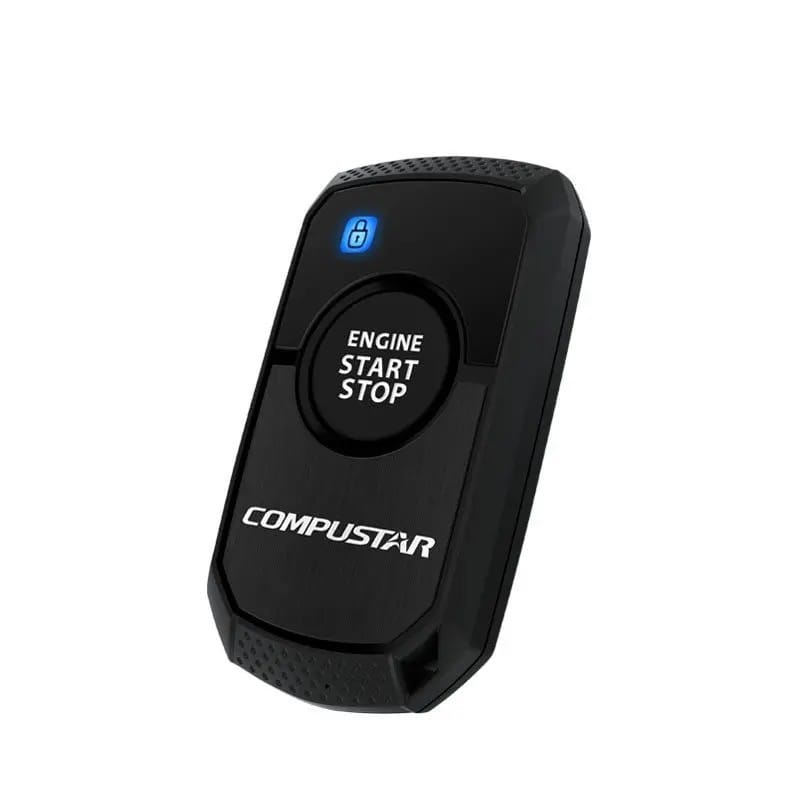
Remote car starter fobs are available in two styles based on the number of buttons: one-button and multi-function.
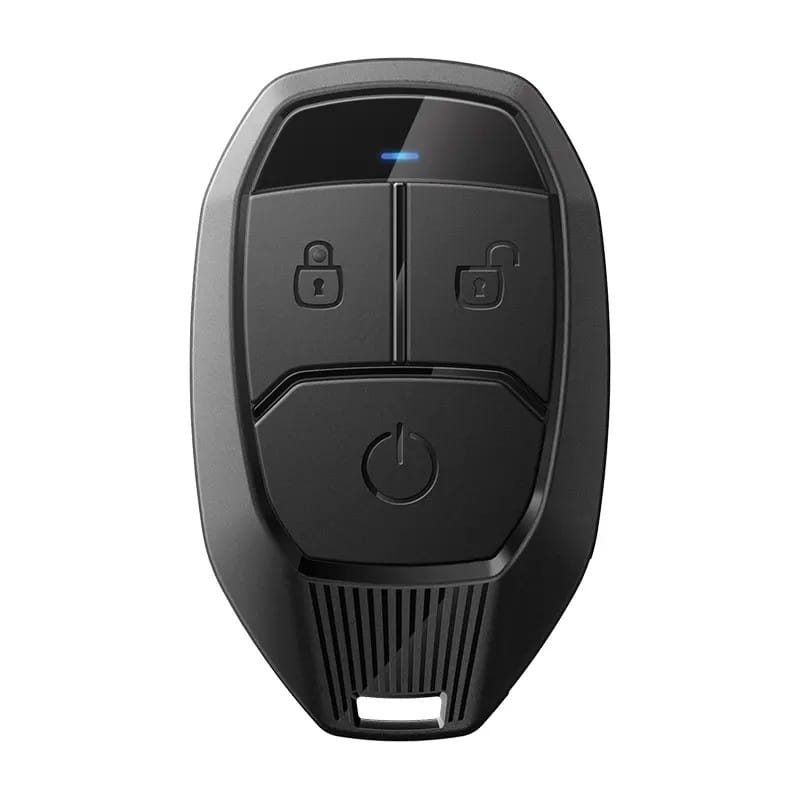
One-button remotes are a good choice if you will continue to carry a factory remote that includes a trunk release button. The factory remote often serves as the vehicle’s key and is required to start the car or truck.
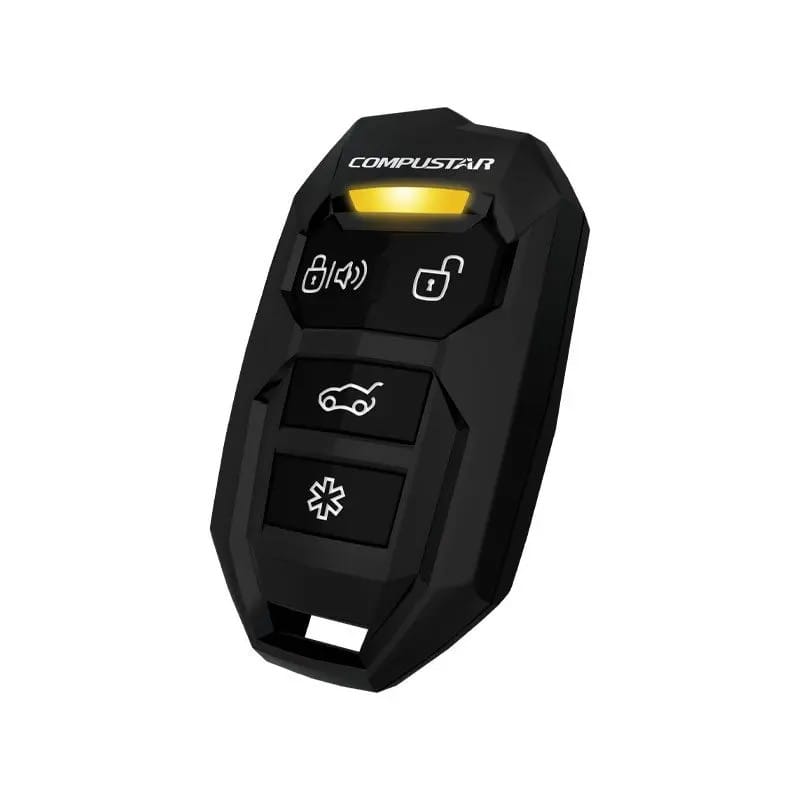
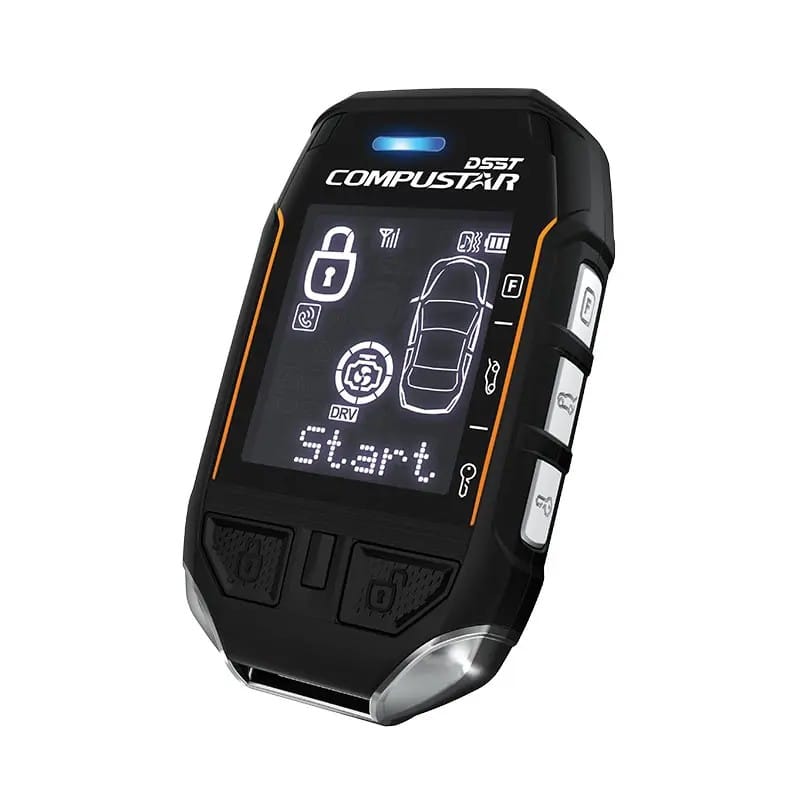
Multi-function remotes have four or five buttons that provide dedicated access to locking/arming, unlocking/disarming, trunk release, remote start, and auxiliary functions. The number of buttons on a remote doesn’t define its quality or range—only the number of functions you have access to.
3. One-Way and Two-Way Remotes
Another key feature to consider is whether you want a one-way or two-way remote.
With a one-way remote, you send a command to the vehicle by pressing a button. If the car is in range, the command will be executed. If you are too far away, nothing happens.
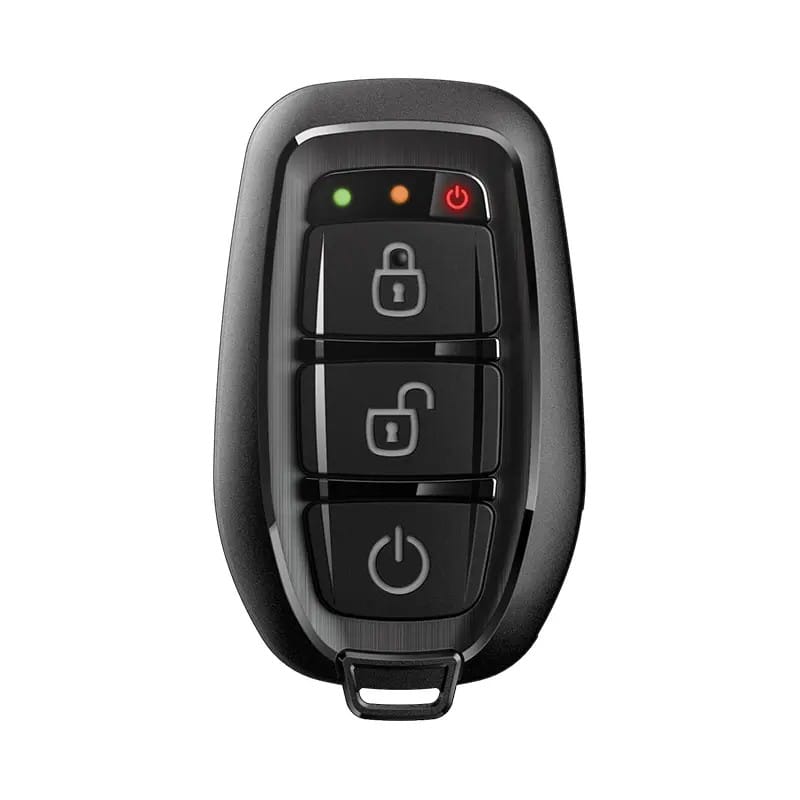
With a two-way remote, any command sent by the remote and executed by the vehicle is confirmed back to the remote. The remote will beep and flash an LED or icon to notify you. You’ll get confirmations for locking, unlocking, remote starting, and other features.
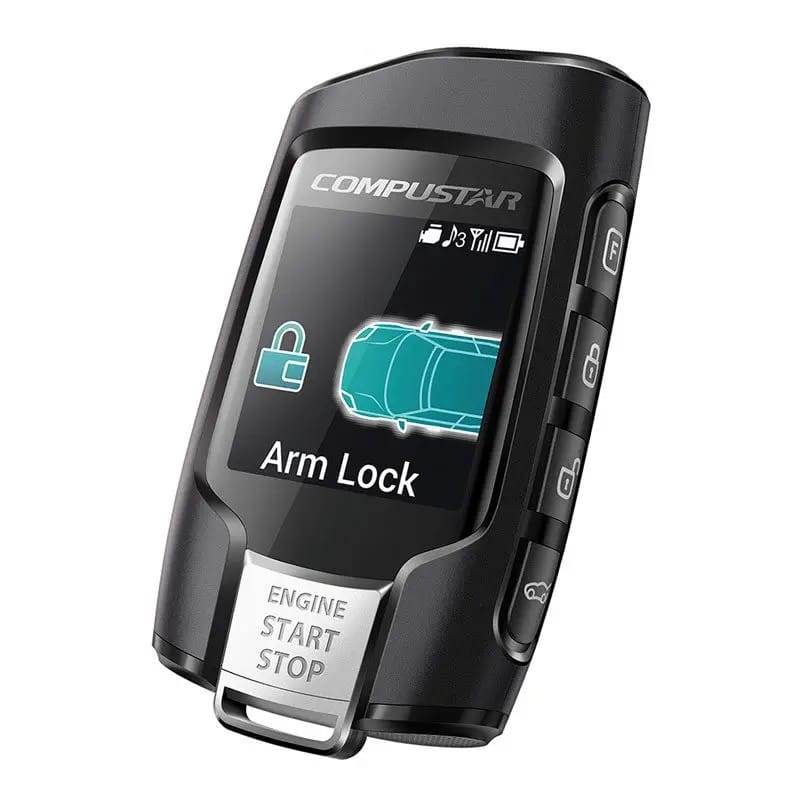
As a subset of two-way remote options, you can pick from LED or LCD visual indicators. An LED remote will have at least one, often three LEDs that flash to indicate when a command has been executed.
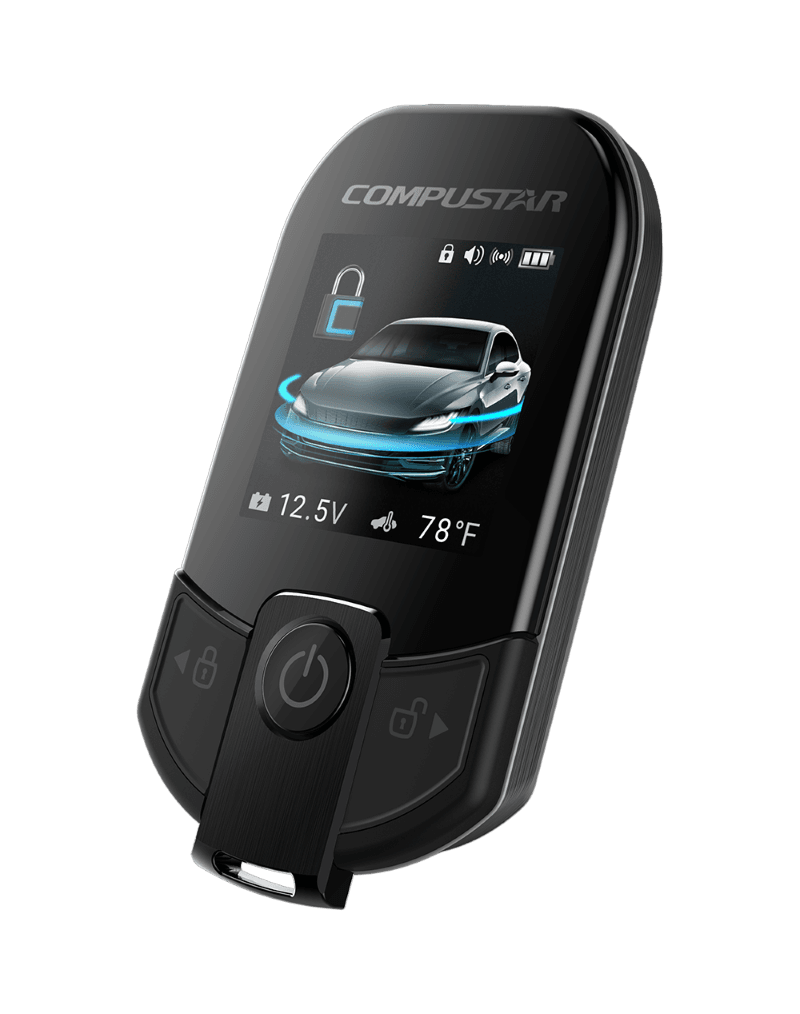
An LCD remote is considered the highest-end option. These remotes use a small LCD screen with icons to show what commands have been executed and the status of your vehicle. For example, a lock symbol on the remote confirms that the vehicle executed a lock/arm command.
4. Battery Type
All remotes require a battery to function. The most common type is the CR2032 coin cell. These three-volt batteries are compact, inexpensive, and typically provide more than a year of service in one-way remotes and many months in two-way remotes. It’s a good idea to purchase an extra battery when you buy the remote so you’re prepared when it wears out.
Many premium remotes have a built-in lithium-polymer or lithium-ion rechargeable battery. These remotes include a Micro-USB or USB-C port for charging. Under normal use, these two-way LCD units last three to five months between charges. Charging only takes a couple of hours and can be done from any powered USB port—even in your vehicle while driving. One tip: it’s best to limit the charge current to these cells. Using a 500 mA wall charger will maximize battery life.
5. Weather-Proof Designs
Some remotes, like Compustar’s flagship models, have a full IPX-7 waterproof rating. Basic remotes are typically water-resistant. If you’re prone to dropping your keys or leaving them in your pocket on laundry day, consider a waterproof solution.
6. Warranty
When shopping for a remote starter, it’s essential to understand the warranty coverage offered by your retailer and the hardware manufacturer. In most cases, the brain or controller is backed by a lifetime warranty. Additionally, these components should be reprogrammable if you plan to use the hardware in another vehicle with a new harness.
Remotes typically come with a one-year warranty, but premium options, such as Compustar’s PRO Series, offer a three-year warranty for added peace of mind.
Finally, don’t forget to ask about the warranty on labor or workmanship. Many reputable shops provide a lifetime warranty on their installation work, ensuring your remote starter continues to function reliably for years to come.
7. Smartphone Control Options
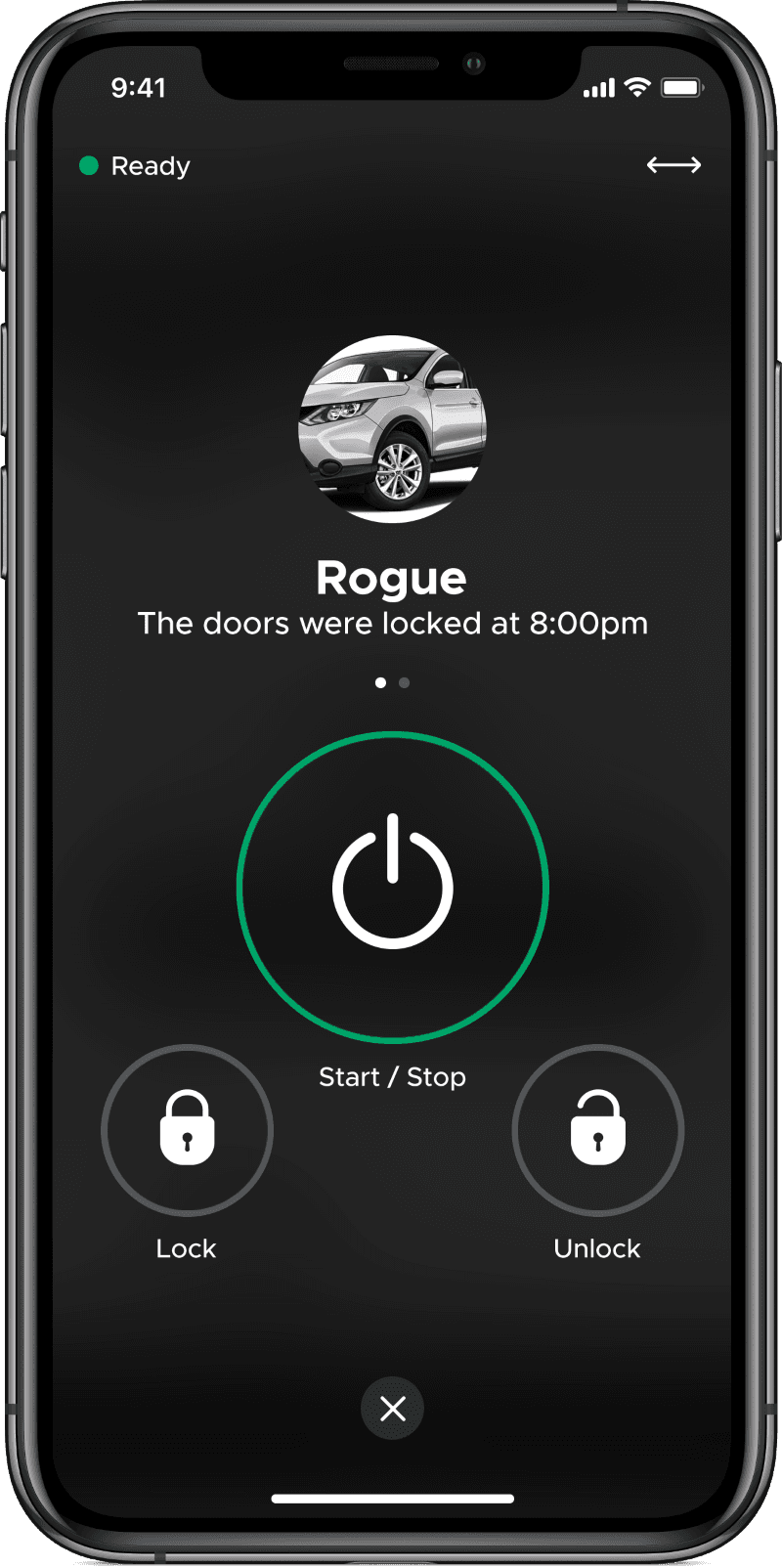
Another option is a smartphone control solution such as Drone. Drone works with an app on your phone that communicates with a small transceiver in the vehicle via the local cellular network. The app allows you to lock, unlock, remote-start, and control auxiliary features, and confirm commands within seconds.
There is a small monthly charge for the cellular service. Retailers can explain available features and service plans, including vehicle tracking and geofencing.
Note: Because Drone and similar services rely on the internet and cellular networks, always carry a regular key fob as a backup in case these services go down. You don’t want to be locked out.
Pick the Best Remote for Your Use Case
When shopping for a remote car starter, your Product Specialist should ask where you park your vehicle relative to where you’ll be when you want to remote start it. If you work in a large manufacturing plant, hospital, or warehouse, you’ll want a long-range remote. If you only start your car in the driveway, range is less critical.
The discussion should also cover features such as trunk/hatch/tailgate releases and power-sliding doors on minivans. Multi-function remotes are ideal for applications that require more than just locking, unlocking, and starting.
Giving your car or truck a few extra minutes to warm up not only makes your commute more comfortable but also allows the engine to operate with warmer coolant and oil, reducing friction and fuel consumption. A remote car starter also makes a great holiday gift—just make sure you pick the best remote for the recipient’s needs.

