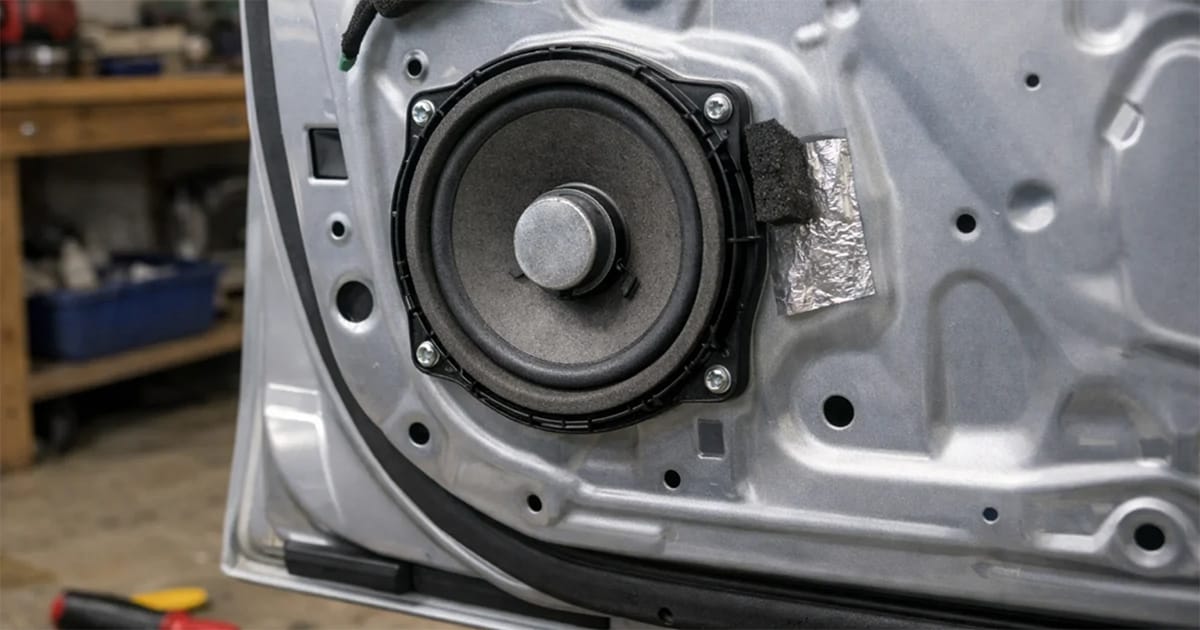
 Factory door speakers are usually the most compromised part of a vehicle’s audio system because they are designed to meet cost, weight, and production targets rather than deliver accurate sound. Carmakers have to balance hundreds of components in every vehicle, and audio hardware is often treated as a necessary feature, not a performance priority.
To control costs, factory speakers commonly use lightweight baskets, small magnets, and basic cone materials. These designs are adequate for voice prompts and casual listening, but they struggle with music that has dynamic range and detail. Even systems marketed as premium often rely on door speakers that are built to tight budgets.
Durability also plays a role. OEM speakers must survive years of vibration, moisture, and temperature extremes with very low failure rates. That requirement pushes designs toward conservative materials and minimal moving mass. Longevity improves, but sound quality rarely does.
Because door speakers reproduce most of the audible spectrum, including vocals, guitars, piano, and the body of bass instruments, their limitations shape the entire listening experience. When these speakers lack control or output capability, no amount of volume adjustment can compensate. The system simply cannot sound clear, balanced, and natural at the same time.
Why Factory Speakers Struggle With Midbass and Clarity
Factory speakers often struggle with midbass and vocal clarity because they lack the motor strength and cone control needed for those frequencies. Midbass requires precise movement and resistance to flex, which low-cost speaker designs cannot maintain consistently.
When cones flex or lose control, details smear together. Vocals sound recessed, drums lose impact, and music feels thin. This is why many factory systems sound acceptable at low levels but never sound full or engaging.
Turning Up the Volume Exposes OEM Speaker Limitations
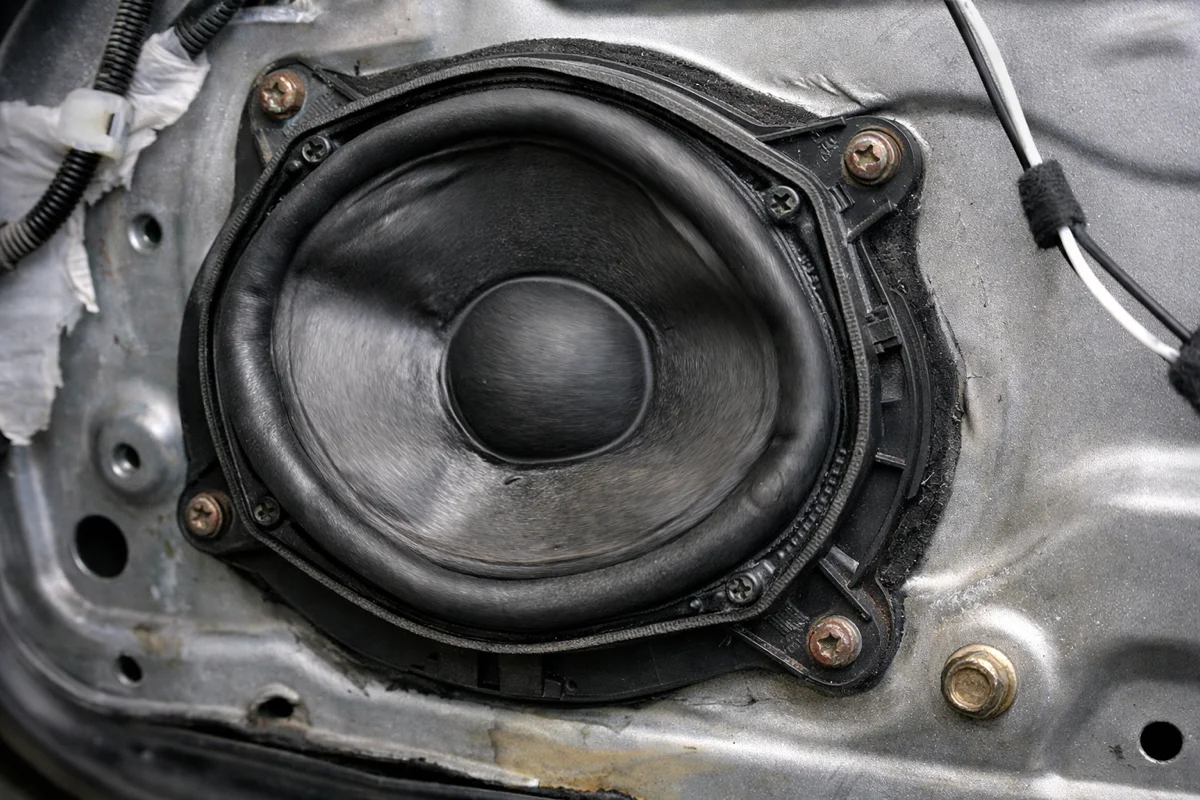
Increasing the volume does not improve sound quality with factory door speakers. It usually exposes their weaknesses.
As volume rises, OEM speakers reach their mechanical limits quickly. Distortion increases, dynamics flatten, and listening fatigue becomes noticeable. Instead of sounding richer, the system becomes harsher and less enjoyable, especially during longer drives.
Modern Factory Audio Systems Add Hidden Challenges
Many modern vehicles use built-in equalization and digital signal processing that is tailored specifically to the factory speakers. These adjustments shape frequency response and output behavior in ways that are not obvious to the listener.
When speakers are replaced without proper system integration and tuning, even high-quality components can underperform. This is why speaker upgrades should be evaluated as part of the entire system, not as isolated parts.
Why Door Speakers Are the Smartest First Audio Upgrade
Door speakers are often the smartest first upgrade because they influence nearly every aspect of what you hear. Improving them directly affects clarity, balance, and realism across all types of music.
Rather than chasing features or specifications, addressing the weakest component creates a noticeable improvement in everyday listening, even at lower volume levels.
What Changes Drivers Notice After a Professional Speaker Upgrade
When factory door speakers are professionally selected, integrated, and tuned, most drivers notice clear improvements right away:
- Vocals sound clearer and more natural
- Midbass has more weight and definition
- Harshness is reduced at higher volumes
- The soundstage feels more cohesive and realistic
These results come from matching the right speakers to the vehicle and tuning the system properly, not from brand names or power ratings alone.
Final Thoughts and Next Steps
Factory door speakers limit what most vehicle audio systems can deliver, regardless of how advanced the vehicle itself may be. Addressing that limitation is often the single most effective way to improve sound quality.
To find out what your vehicle is capable of, use the Dealer Locator on BestCarAudio.com to connect with a qualified retailer. Professional evaluation, system integration, and expert tuning are the keys to predictable, satisfying results.

