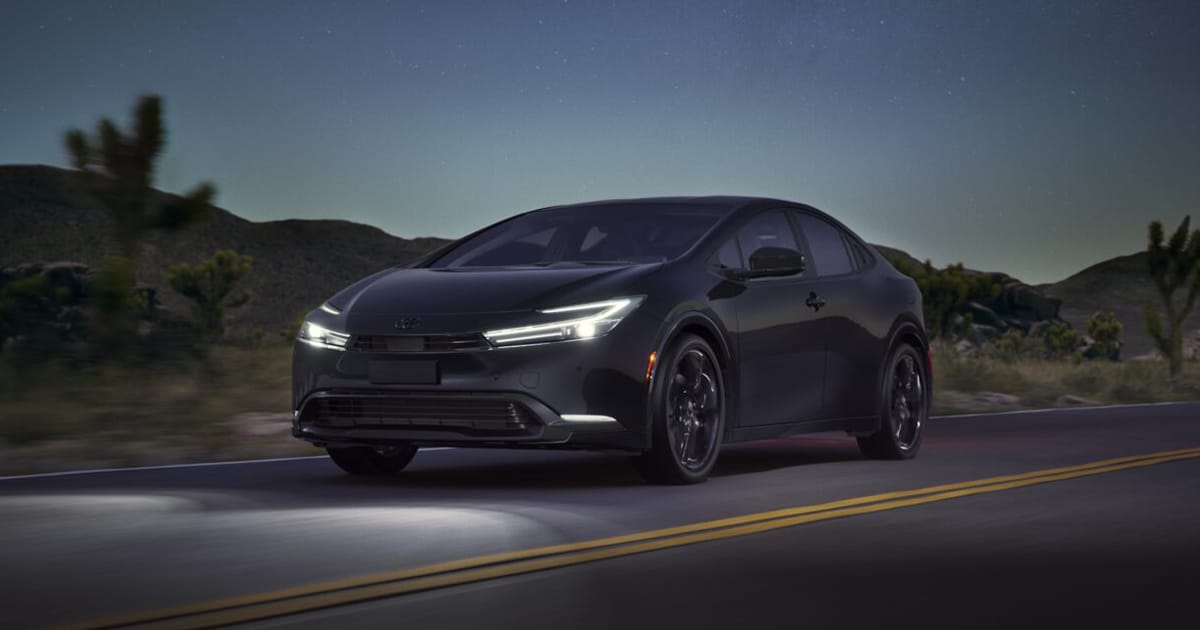
When you think Prius, typically good looks aren’t on the top of the list. Instead, efficiency and practicality jump to the top of the list. The 2026 Toyota Prius redesign is very good looking and surprised the automotive world how good the design translates to the streets. When my tester showed up in the driveway wearing a yellow that would be proud on a Lamborghini, I was really surprised. Toyota calls it Karashi Yellow, and in Canada it is called Maximum Yellow. On a Prius! Couple that with blacked-out accents including exterior badging, black front door handles, a black satellite-radio shark fin antenna, and black bumper trim. You are rolling on 19s that are also murdered out. So, it is wild to be walking up to a sporty Prius. If practicality, fuel economy and a dash of fun are on your shopping list, the Prius Nightshade edition may be your ride!
Powertrain
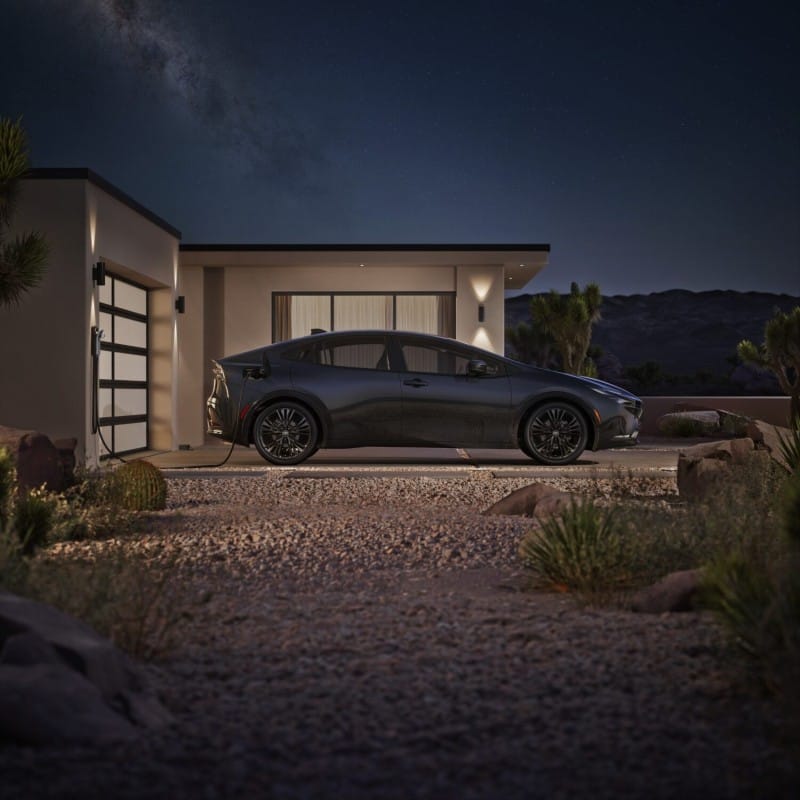 The Nightshade edition is a plug-in hybrid but Toyota wants you to know that it will work as a regular hybrid Prius if you do not have the ability to plug it in. If you can plug it in, it will take about 11 hours to charge off a 120V standard household outlet. If you do that, it will charge up the 13.6 kWh lithium-ion battery and give you about 40 miles of electric range. The Prius Plug-in Hybrid combines Toyota’s fifth-generation Toyota Hybrid System with a 2.0-liter engine and electric motor generators for an efficient driving experience with a manufacturer-estimated combined rating of 52 MPG. It also has impressive horsepower with 220 net-combined hybrid system horsepower.
Modes of Hybrid
If you do not like making frequent trips to the gas station, the Prius has different modes of operation that can help you minimize fuel burn and Shell trips. Toyota notes the Prius Plug-in Hybrid can operate in EV, Auto EV/HV, or Hybrid Mode depending on the driver’s needs and the vehicle’s state of EV battery charge. EV Mode relies solely on the vehicle’s battery when there is sufficient charge and functions just like any other EV Electric Vehicle without support from the gasoline engine. When in Auto EV/HV Mode, the vehicle will still primarily rely on the vehicle’s battery to drive the wheels but will switch to HV mode to provide additional power in more demanding circumstances, like up steep hills or at higher speeds. In Hybrid Mode, the Prius Plug-in Hybrid automatically switches between the gasoline engine and the electric motors to efficiently combine the engine drive force and the electric power from the hybrid battery.
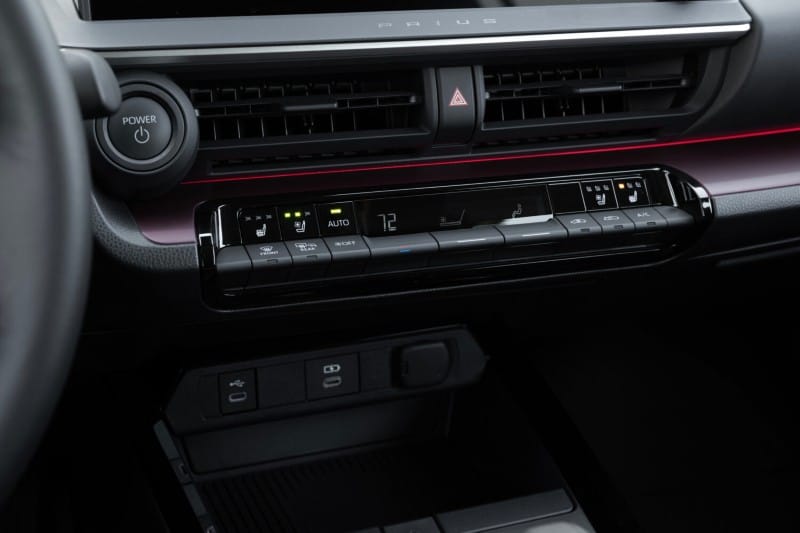 So, the ultimate would be to plug in your Prius and go easy on the power. You’ll then have about 40 miles before the gasoline engine would need to kick in. Theoretically, if you live in a mild climate you could go months before you need to visit the gas station if your commute is less than 40 miles. There are also Normal, Eco and Sport drive modes so you can go Eco if you want to eke out every last mile. Toyota also notes the Prius can optimize efficiency by recognizing the driver’s stopping patterns on frequently driven routes and suggesting when to let off the accelerator. Predictive Efficient Drive with Predictive Deceleration Support collects daily driving data to optimize points of deceleration and stopping. When the driver goes through a place frequently traveled the system indicates when to let off the accelerator. It can apply assisted deceleration to boost fuel efficiency by regenerating energy.
Inside Goodies
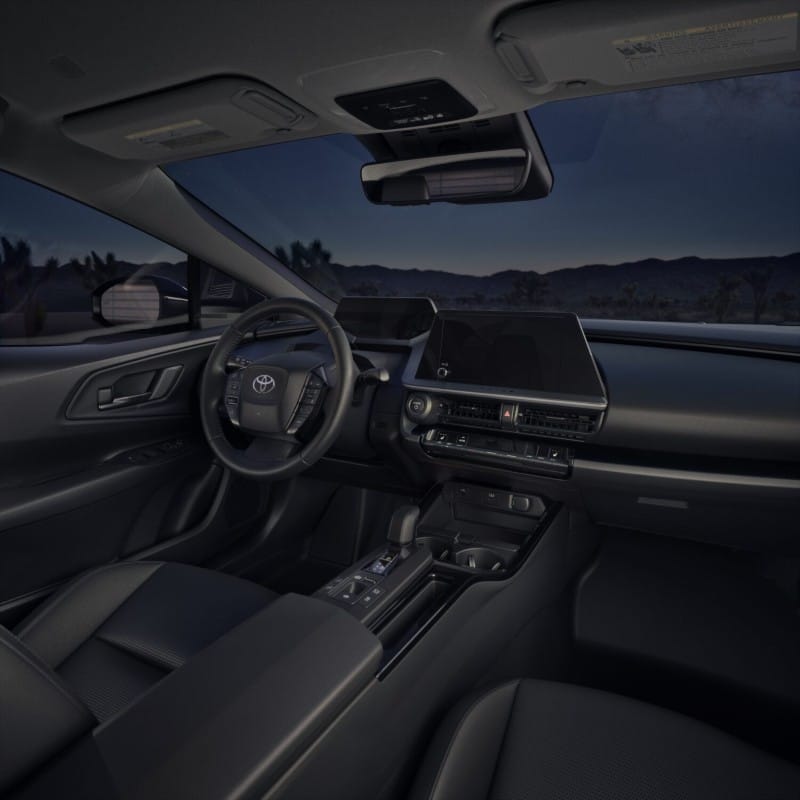 The cabin is dominated by the easy-to-use 12.3-inch high-resolution touchscreen display. The fixed glass roof lets natural light inside and brightens the space up. The three-stage heated seats and heated steering wheel work great. I did have my tester during a very cold winter snap and the only thing that did not work great was the electronic front windshield defroster. It may have the power to reduce condensation, but it did not have the muscle to loosen up exterior ice.
Available options are a Panoramic View Monitor, Digital Rearview Mirror, heated rear seats and Advanced Park, which is designed to perform steering and braking controls and helps drivers navigate the vehicle into a selected parking space. It is also capable of parallel parking and backing up into a perpendicular space by using a combination of cameras and sensors to recognize the vehicle’s surroundings. The only caveat is you have to hold down the “OK” button and keep a lookout for pedestrians or obstacles while the Prius is doing its parking magic.
Sound for Around Town
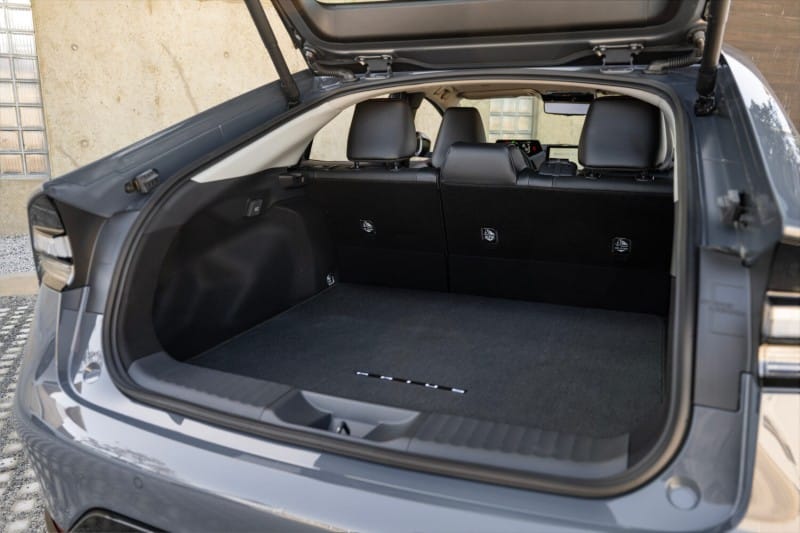 Surprisingly my nearly-loaded Nightshade edition tester did not have the optional JBL car audio system with Clari-Fi Technology. Instead, it was the basic 6-speaker system. I was expecting the worst, but the six-speaker system is a great starting point. The drivers are not bad, and the system will achieve a reasonable volume level for most casual listeners. My first upgrade would be an aftermarket subwoofer in the large trunk. That will take the stress off the small, provided speakers so they don’t have to make low bass. Then incremental upgrades could include better speakers, more amplification, and finally a DSP to tune everything perfectly. It is good enough to get you going.
The Prius Nightshade starts at $33K with that killer 57 MPG combined. Plugging it in at night will have you rarely visiting gas stations. Moreover, it looks sporty! Couple that with Toyota’s legendary reliability and you have a winner.

