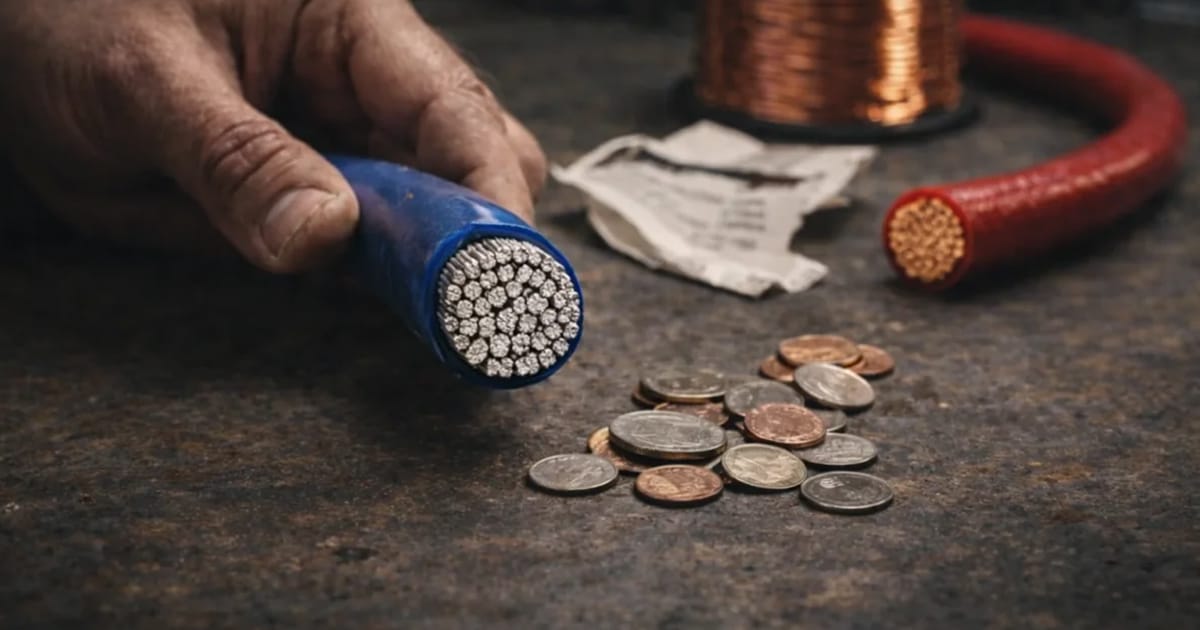
A common scenario unfolds when a car audio enthusiast invests $2,000 in a high-end amplifier and subwoofer setup, only to have the system underperform and eventually damage the amplifier. The culprit? A $30 savings on wire that turned out to be copper-clad aluminum instead of oxygen-free copper.
What Are OFC and CCA Wires
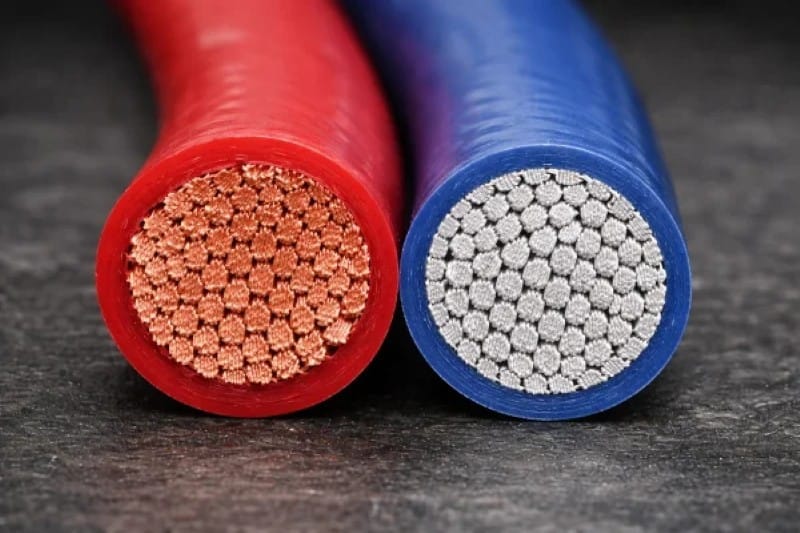
OFC stands for oxygen-free copper, which means the wire uses pure copper conductors with minimal oxygen content. CCA stands for copper-clad aluminum, featuring aluminum cores wrapped in a thin copper coating. The fundamental difference lies in the core material: OFC wire is solid copper throughout, while CCA wire uses aluminum as its primary conductor with only a superficial copper layer.
Why CCA Wire Exists in the Car Audio Market
CCA wire emerged as a cost-cutting measure when copper prices soared in the early 2000s. Aluminum costs roughly one-third the price of copper per pound, making it an attractive alternative for manufacturers looking to reduce production costs. By applying a thin copper coating to aluminum wire, manufacturers could create a product that looked identical to pure copper wire while slashing material costs by 60 to 70 percent.
The Critical Performance Differences Between OFC and CCA
Copper conducts electricity approximately 40 percent better than aluminum. A 4-gauge CCA wire delivers performance closer to 6-gauge or even 8-gauge OFC wire, despite having the same external diameter.
When an amplifier draws heavy current during bass hits, CCA wire creates substantial voltage drop. A typical 1,000-watt amplifier pulling 100 amps through 20 feet of 4-gauge CCA wire can experience voltage drops exceeding 1.5 volts, compared to just 0.6 volts with OFC wire. This voltage drop translates directly to reduced amplifier output power. An amplifier rated for 1,000 watts at 14.4 volts might produce only 750 watts when fed through CCA wire.
CCA wire oxidizes more readily than OFC, especially at connection points where the thin copper coating can wear away. Aluminum is more brittle than copper, making CCA wire prone to cracking when bent repeatedly or vibrated over time. The dissimilar metals in CCA wire can create galvanic corrosion at connection points, appearing as white, powdery deposits that increase resistance.
Safety Concerns with CCA Wire
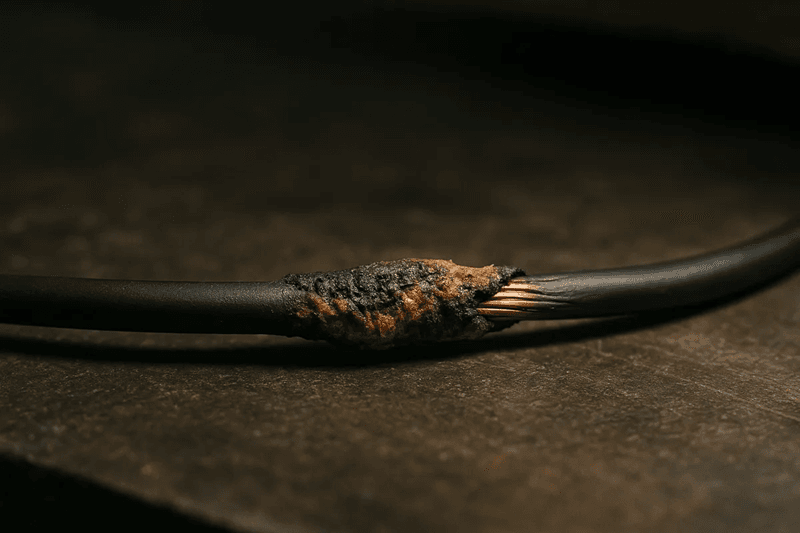
Higher resistance generates more heat. Tests show CCA wire can reach temperatures 30 to 50 degrees Fahrenheit higher than equivalent OFC wire under identical loads. This excess heat accelerates insulation breakdown and increases fire risk, especially when wire is bundled or routed through tight spaces. Professional installers have documented cases where CCA wire melted its own insulation during normal operation.
Real-World Impact on Your Car Audio System
Using CCA wire affects every aspect of system performance. Dimming headlights during bass hits indicate voltage drop robbing the amplifier of power. Amplifiers may enter protection mode prematurely when voltage drops below their operating threshold. Speakers receive less power than intended, reducing output and potentially causing amplifier clipping that damages voice coils.
How to Identify OFC vs CCA Wire Before You Buy
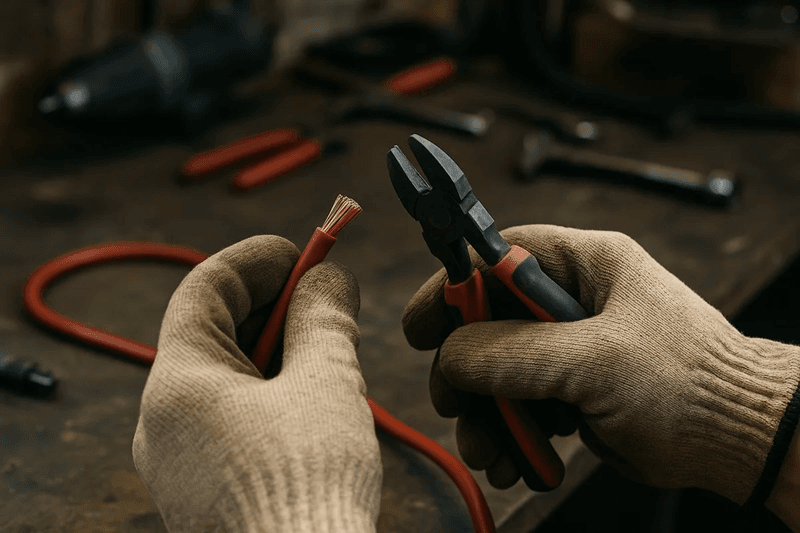
Price provides the first clue: genuine OFC wire costs two to three times more than CCA alternatives. A 17-foot amplifier wiring kit using true 4-gauge OFC wire typically costs $80 to $150, while CCA versions sell for $30 to $50.
Physical testing offers definitive proof. Cut through a wire sample and examine the core: OFC wire shows consistent copper color throughout, while CCA wire reveals a silver-colored aluminum center. Some manufacturers clearly label their products, but others deliberately obscure wire composition in marketing materials.
Making the Smart Investment: Why OFC Pays Off
Quality OFC wire represents a tiny fraction of total system cost but determines whether that system reaches its potential. Spending an extra $50 to $100 on proper wiring protects thousands of dollars in equipment while ensuring reliable performance for the life of the installation. OFC wire maintains its conductivity over time, resists corrosion, handles temperature extremes better and provides the consistent power delivery that high-performance audio equipment demands.
Ready to upgrade your car audio system the right way? Visit the BestCarAudio.com Dealer Locator to find a professional installer who can ensure your system performs safely at its full potential.

