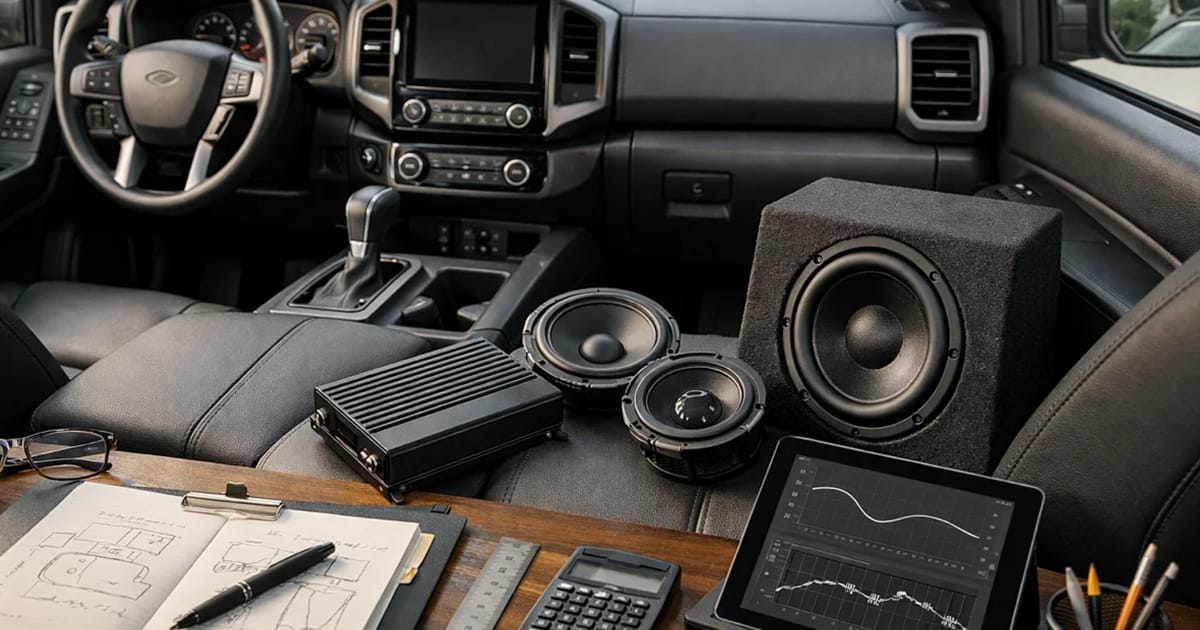
Upgrading your car audio system can significantly improve your daily drive, but great results rarely happen by accident. The difference between a system that simply plays louder and one that truly delivers clarity, impact and realism comes down to planning. Before choosing speakers, amplifiers or subwoofers, you need to think strategically about what you want and how the system will fit your vehicle and lifestyle.
Define Your Sound Goals Before You Shop
The most important starting point is knowing how you want your system to sound. Clear goals prevent wasted money and mismatched equipment.
Some drivers want clean, accurate sound with crisp vocals and a realistic soundstage. Others want deep, powerful bass that you can feel. Many want a balanced combination of clarity and output that performs well at any volume. Without defining these priorities, it is easy to invest in products that do not deliver the experience you expect.
When you can clearly describe your preferences, a qualified retailer can design a system that aligns with your expectations rather than guessing. This single step dramatically increases the odds that you will be satisfied with the final result.
Understand Your Space Constraints

Caption: A well-planned installation should enhance low-frequency performance while preserving usable cargo space and maintaining a clean, practical layout.
Every vehicle limits how much equipment can be added and where it can go. Knowing how much space you are willing to dedicate to audio components is essential before designing a system.
Subwoofers and amplifiers require physical room. Some solutions can be compact and discreet, while others may take up significant trunk or cargo space. If preserving storage capacity is important, that should be discussed early. Being honest about your space expectations helps prevent compromises after the design process begins.
Establish a Realistic Budget

Caption: Setting a clear budget before selecting speakers, amplifiers or subwoofers helps ensure balanced system performance and prevents overspending on a single component category.
Your budget sets the framework for what is possible. A defined investment range allows a retailer to recommend equipment and system architecture that delivers the best value within your comfort zone.
It is not just about speakers. Budget affects sound treatment, amplification, signal processing and integration. A balanced system often outperforms a setup where most of the money goes into one component category. Setting expectations early keeps the project focused and avoids disappointment later.
Consider How Long You Plan to Keep the Vehicle
How long you intend to own your vehicle should influence the scope of your upgrade. Long-term ownership often justifies a more comprehensive system.
If you plan to keep the vehicle for many years, investing in higher-performance equipment and more advanced system design may make sense. If you expect to trade or sell the vehicle soon, a more moderate upgrade might be the smarter financial choice. Aligning your investment with your ownership timeline protects your return on enjoyment.
Think About Vehicle Integration and Technology
Modern vehicles are complex. Factory infotainment systems, steering wheel controls, safety alerts and data networks all play a role in how an upgraded audio system must be designed.
A properly planned upgrade preserves factory features while dramatically improving performance. Ignoring integration considerations can lead to functionality issues or reduced convenience. Discussing these factors early ensures that performance improvements do not come at the expense of usability.
Plan for Future Expansion
A well-designed system should leave room to grow. Even if you start with a modest upgrade, planning for future additions can save money and complexity later.
For example, choosing equipment that supports adding a subwoofer or digital signal processor in the future prevents the need to replace major components. Thinking ahead protects your investment and gives you flexibility as your expectations evolve.
Choose the Right Installer Above All Else

Caption: An experienced professional using proper measurement and tuning tools ensures your upgraded audio system delivers accurate performance while preserving factory integration and long-term reliability.
The single most important decision in any car audio upgrade is choosing the right professional installer. More than the brand of speaker or amplifier, the expertise of the retailer determines the outcome.
A reputable specialist will ask about your goals, space constraints, budget and ownership plans before recommending equipment. They understand vehicle integration, acoustic tuning and system design. Most importantly, they stand behind their work and provide ongoing support.
Even the best equipment cannot compensate for poor design or improper tuning. Conversely, a skilled professional can make a well-planned system perform far beyond expectations. If you prioritize only one factor in your upgrade, make it the quality and reputation of the retailer you choose.
Conclusion
Successful car audio upgrades are the result of clear goals, realistic expectations and thoughtful planning. When you understand what you want, how much space you can dedicate, what you want to invest and how long you will keep the vehicle, the entire process becomes more predictable and rewarding.
Above all, partner with a qualified professional who can guide you through the decisions and deliver results that match your expectations. To experience the full potential of your vehicle’s audio system, visit the BestCarAudio.com Dealer Locator and connect with a trusted specialty retailer near you. Professional design, installation and system tuning make all the difference.

