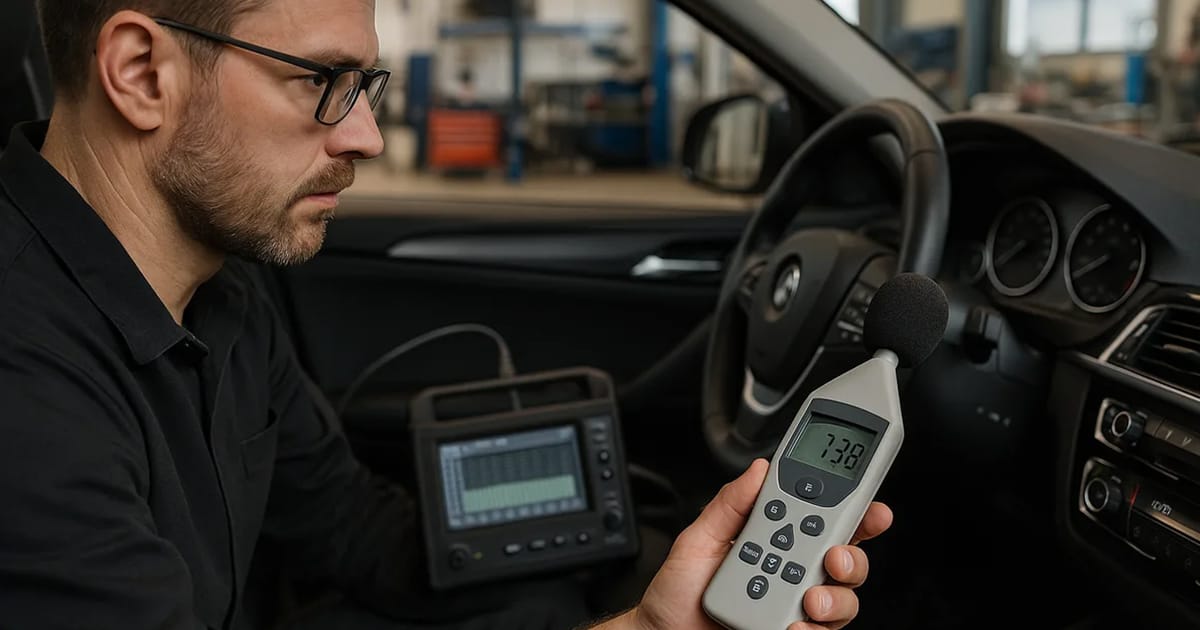
At 70 mph, the average vehicle generates 75 to 80 dB of background noise, louder than a vacuum cleaner running next to your ears. This acoustic assault drowns out the subtle guitar passages, vocal harmonics and spatial cues that make music engaging. Understanding and controlling this “noise floor” transforms mediocre car audio into an immersive listening experience.
Understanding the Car Audio Noise Floor
The noise floor represents all unwanted sounds in your vehicle that compete with music playback. Wind rushing past mirrors, tires rolling on pavement, engine vibrations through the chassis, these sources combine to create a constant acoustic backdrop. While home listening rooms typically measure 30 to 40 dB, vehicles at highway speeds generate more than double that level of background noise.
This fundamental difference explains why the same audio system sounds dramatically different in motion versus parked. Musical details that shine through clearly with the engine off disappear entirely once road noise takes over. The challenge isn’t volume, it’s recovering information buried beneath the noise.
Professional installers address noise floor through strategic material placement and proven damping techniques. They identify specific frequency problems unique to each vehicle model and apply targeted solutions that maintain effectiveness through years of use.
How Road and Engine Noise Impact Your Listening Experience

Tire noise alone generates 68 to 72 dB at highway speeds, effectively masking any musical content below that threshold. Lower midrange frequencies where vocals live suffer most, along with high-frequency details that provide spatial imaging. Drivers compensate by cranking volume levels, but this creates listener fatigue. After 30 minutes of elevated playback, temporary threshold shift makes everything sound muffled once you exit the vehicle.
The Science Behind Signal-to-Noise Ratio in Vehicles
Signal-to-noise ratio (SNR) measures the gap between your music and background noise. With a 75 dB noise floor and music playing at 85 dB, you have only 10 dB of usable dynamic range, far below the 60 to 80 dB present in quality recordings. Reducing noise floor by 10 dB doubles your effective dynamic range, revealing previously hidden musical layers.
Human hearing perceives this non-linearly: a 10 dB reduction sounds half as loud but dramatically improves clarity. The subtle brush on a snare drum, piano note decay and vocal breathiness emerge from sonic murk. Classical and jazz benefit most from expanded dynamic range, while rock gains better instrument separation and electronic music reveals complex layered passages.
Sound Deadening Materials and Their Role in Noise Reduction
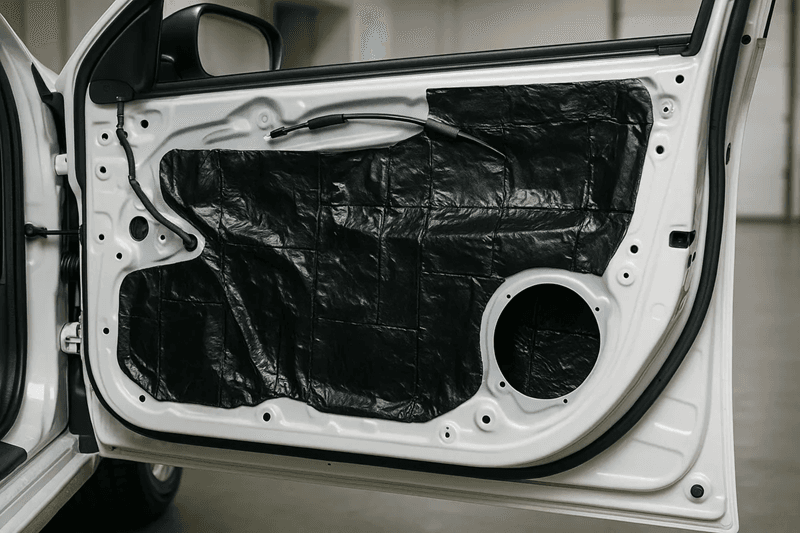
Butyl-based deadening materials convert panel vibrations into heat, preventing metal surfaces from resonating. Treating door panels reduces their output by three to six dB, a 50 to 75 percent reduction in perceived loudness. Strategic application matters more than total coverage. Targeting doors, floor pans and roof panels with 25 percent coverage yields three to five dB reduction. Comprehensive 60 percent treatment can achieve eight to 10 dB improvement.
How Tire Selection Affects Your Car’s Acoustic Environment

Performance summer tires versus touring models designed for quiet operation can differ by five to eight dB, equivalent to doubling or halving perceived road noise. Tread pattern, compound and sidewall construction determine noise transmission. A tire rated 69 dB versus 74 dB represents significant cabin refinement when combined with proper damping treatment.
Engine and Mechanical Noise Sources You Can Address
Worn door seals add three to four dB of wind noise at speed. Check for visible gaps or air leaks using the dollar bill test, if paper slides freely when closed in the door, seals need replacement. Loose heat shields create resonances at specific RPMs. Engine bay insulation degrades over time, allowing more mechanical noise through the firewall. These maintenance items provide acoustic benefits beyond their primary functions.
Professional vs. DIY Approaches to Noise Floor Reduction
Professional installers use acoustic measurement tools to identify problem frequencies specific to your vehicle. They apply materials and techniques proven effective through years of thermal cycling and vibration. While basic door dampening offers good results for experienced enthusiasts, comprehensive solutions require expertise to avoid common mistakes like over-dampening or treating the wrong frequencies.
Ready to discover how much musical detail your car audio system has been hiding? Use the BestCarAudio.com Dealer Locator to find qualified specialists who can measure your vehicle’s current noise floor and design targeted solutions for revealing your system’s true potential.

