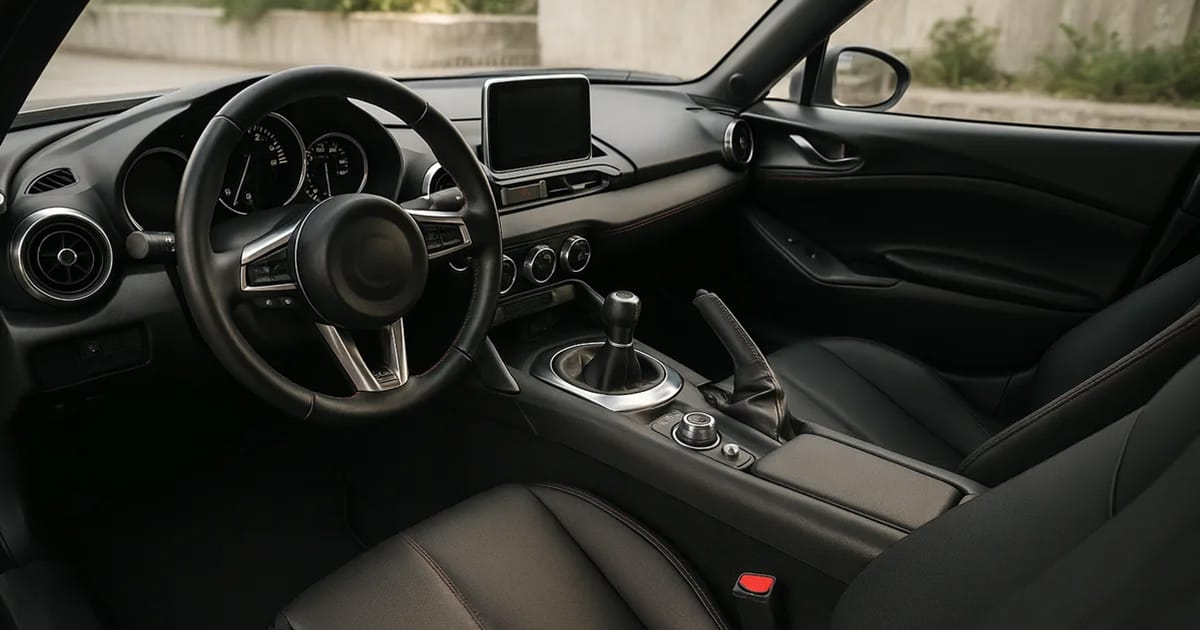
You spent six figures on that new 911 Turbo, yet the factory Bose system sounds worse than the base audio in a Honda Civic. The moment you accelerate, engine noise drowns out your music. At highway speeds, you can barely hear the vocals. This isn’t a defect: it’s the inevitable result of sports car design priorities clashing with acoustic requirements.
The Physics Problem: Why Sports Cars Fight Good Sound
Sports cars create an inherently hostile environment for quality audio reproduction. Every design decision that makes these vehicles fast and nimble works against acoustic performance. The carbon fiber panels that reduce weight by 40 percent also transmit more vibration than traditional steel. The compact cabins that minimize drag create standing waves and acoustic hot spots. The stiff suspension that enables 1.2g cornering passes every road imperfection straight into the cabin as noise.
Road Noise: The Biggest Enemy of Sports Car Audio

Performance tires generate the most intrusive noise in any sports car. Michelin Pilot Sport 4S tires, common on vehicles like the BMW M4, produce 73 dB of noise at 60 mph on smooth asphalt. Switch to track-focused Pilot Sport Cup 2s, and that jumps to 78 dB. For reference, normal conversation happens at 60 dB. This tire noise masks musical details and forces volume levels that cause listener fatigue. The aggressive tread blocks that provide cornering grip act like hundreds of tiny drums beating against the pavement.
Space Constraints: Working Within Tight Quarters
The limited interior dimensions present the primary challenge for audio upgrades. A Porsche Cayman’s doors offer just 2.5 inches of speaker mounting depth behind the window track. The cargo area provides 5.3 cubic feet total, but subwoofer enclosures need at least 0.75 cubic feet for a modest 10-inch driver. Factor in the spare tire, battery, and cooling components already competing for space, and traditional audio solutions simply don’t fit.
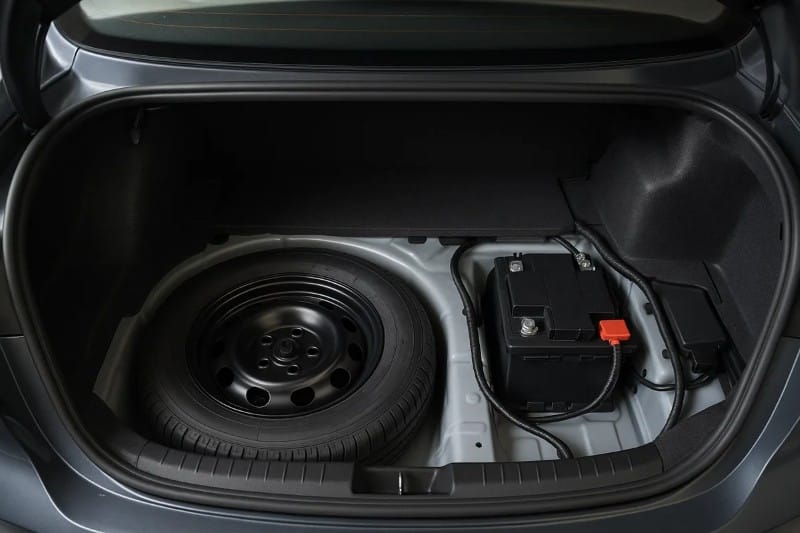
Aftermarket installers address these constraints through component selection and custom fabrication. JL Audio’s TW1 shallow-mount subwoofers deliver genuine sub-bass from just 2.25 inches of mounting depth. Focal’s K2 Power ES l
ine includes 6.5-inch component speakers that fit 2.7-inch openings while maintaining 89 dB sensitivity. Custom fiberglass enclosures molded to unused spaces behind seats or in footwells maximize available volume without sacrificing passenger comfort.
The most successful installations treat space as the primary constraint from the start. Rather than forcing full-size components into undersized locations, experienced installers select products engineered specifically for compact applications. This approach yields better results than compromising installation quality to accommodate larger speakers.
Uneven Sound Distribution: The Sports Car Seating Challenge
Low seating positions and wide door sills place listeners extremely close to door speakers. In a Mazda MX-5, the driver’s left ear sits 16 inches from the woofer while the right ear is 42 inches from its corresponding speaker. This proximity difference creates an 8 dB volume imbalance that no amount of balance adjustment can properly correct. Digital signal processors with time alignment capabilities can delay the closer speakers by milliseconds, creating the illusion of centered sound.
Factory Audio Limitations: Why OEM Systems Fall Short
Weight restrictions force manufacturers into component compromises. The base audio system in a Lotus Evora uses paper cone speakers with ferrite magnets weighing eight ounces each. Comparable aftermarket speakers with neodymium magnets and composite cones weigh 12 ounces but deliver twice the power handling and lower distortion. Factory amplifiers typically produce 25 watts RMS per channel, using efficient but lower-quality Class AB circuits to minimize heat generation in cramped mounting locations.
Convertible Complications: When the Top Goes Down
Convertibles face impossible acoustic challenges. Wind buffeting in a Chevrolet Corvette convertible reaches 82 dB at 70 mph with the top down. The fabric top in a BMW Z4 provides just 6 dB of noise isolation compared to the steel roof of the coupe version. Systems must function in two completely different acoustic environments, making proper tuning nearly impossible without separate settings for each configuration.
The Integration Challenge: Upgrading Without Breaking Your Car
Modern CAN bus systems integrate audio deeply into vehicle networks. Modern vehicles route climate control, vehicle telemetry, and driving mode selection through its infotainment system. Removing the factory head unit disables these functions. Integration modules from companies like iDatalink and PAC Audio preserve factory features while enabling aftermarket upgrades. The Maestro AR module translates steering wheel controls, displays song information, and maintains factory backup camera operation.
Smart Solutions: Audio Upgrades That Actually Work in Sports Cars
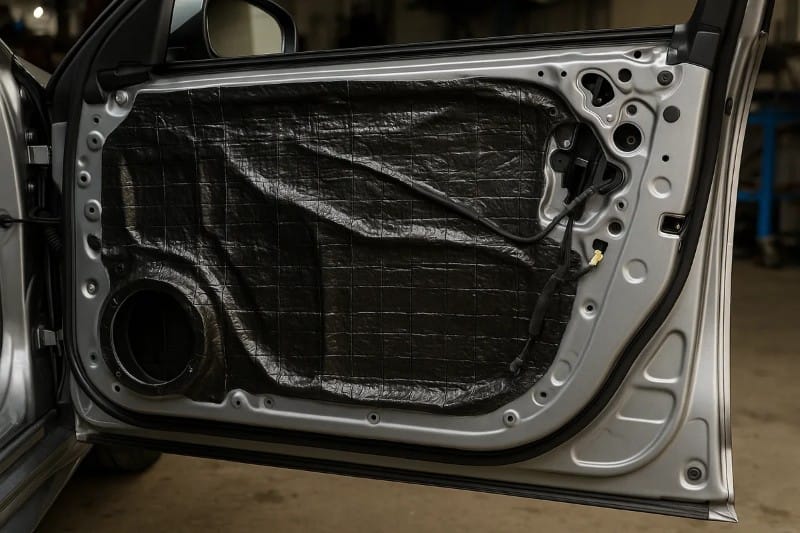
Successful sports car audio requires addressing specific weaknesses rather than wholesale replacement. Strategic application of sound deadening in door panels reduces panel resonance by 12 dB at problematic frequencies between 80 and 200 Hz. This targeted approach adds just eight pounds while dramatically improving midbass clarity.
High-efficiency speakers maximize limited amplifier power. Morel’s Virtus component systems achieve 91 dB sensitivity, producing satisfying volume levels from factory power. Adding a compact powered subwoofer provides missing bass extension from as little as 0.5 cubic feet of space.
Digital signal processing provides the final piece. Many aftermarket products compensate for poor speaker locations through precise equalization and time correction. Professional tuning using real-time analysis ensures optimal response for the specific vehicle environment.
Ready to transform your sports car’s audio system from disappointing to dynamic? Visit the BestCarAudio.com Dealer Locator to connect with a specialty retailer that understands the unique challenges of performance vehicle audio and can design a solution that enhances your driving experience without compromise.

